What GSM measures
GSM stands for grams per square metre. It is the weight of one square metre of fabric, and it is the quickest way for a buyer and a mill to agree on how thick, opaque and durable a fabric should feel before a sample is cut.
A higher GSM means more yarn in the same area. That usually gives a denser, warmer, less see-through fabric. A lower GSM drapes more and breathes better. Neither is better on its own.
Typical GSM ranges by garment
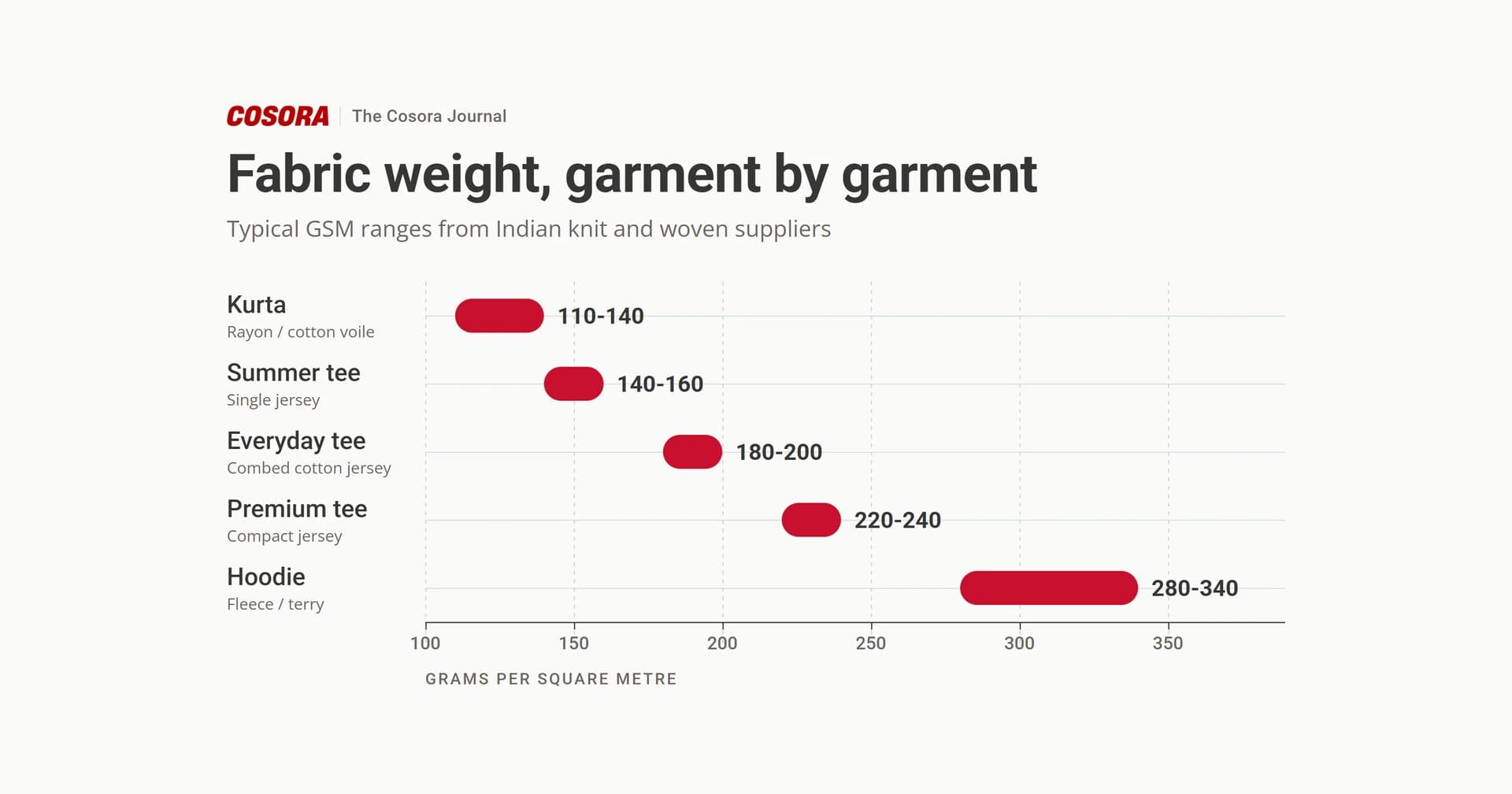
These are the ranges most Indian knit and woven suppliers work within. Use them as a starting point for your RFQ, then confirm with a swatch.
| Garment | GSM | Common fabric |
|---|---|---|
| Summer tee | 140-160 | Single jersey |
| Everyday tee | 180-200 | Combed cotton jersey |
| Premium tee | 220-240 | Compact jersey |
| Hoodie | 280-340 | Fleece / terry |
| Kurta | 110-140 | Rayon / cotton voile |
How GSM affects cost and MOQ
Fabric is priced by weight, so a 220 GSM T-shirt uses noticeably more yarn than a 160 GSM one of the same size. Mills also keep common weights in stock; asking for an unusual GSM can push the MOQ up.
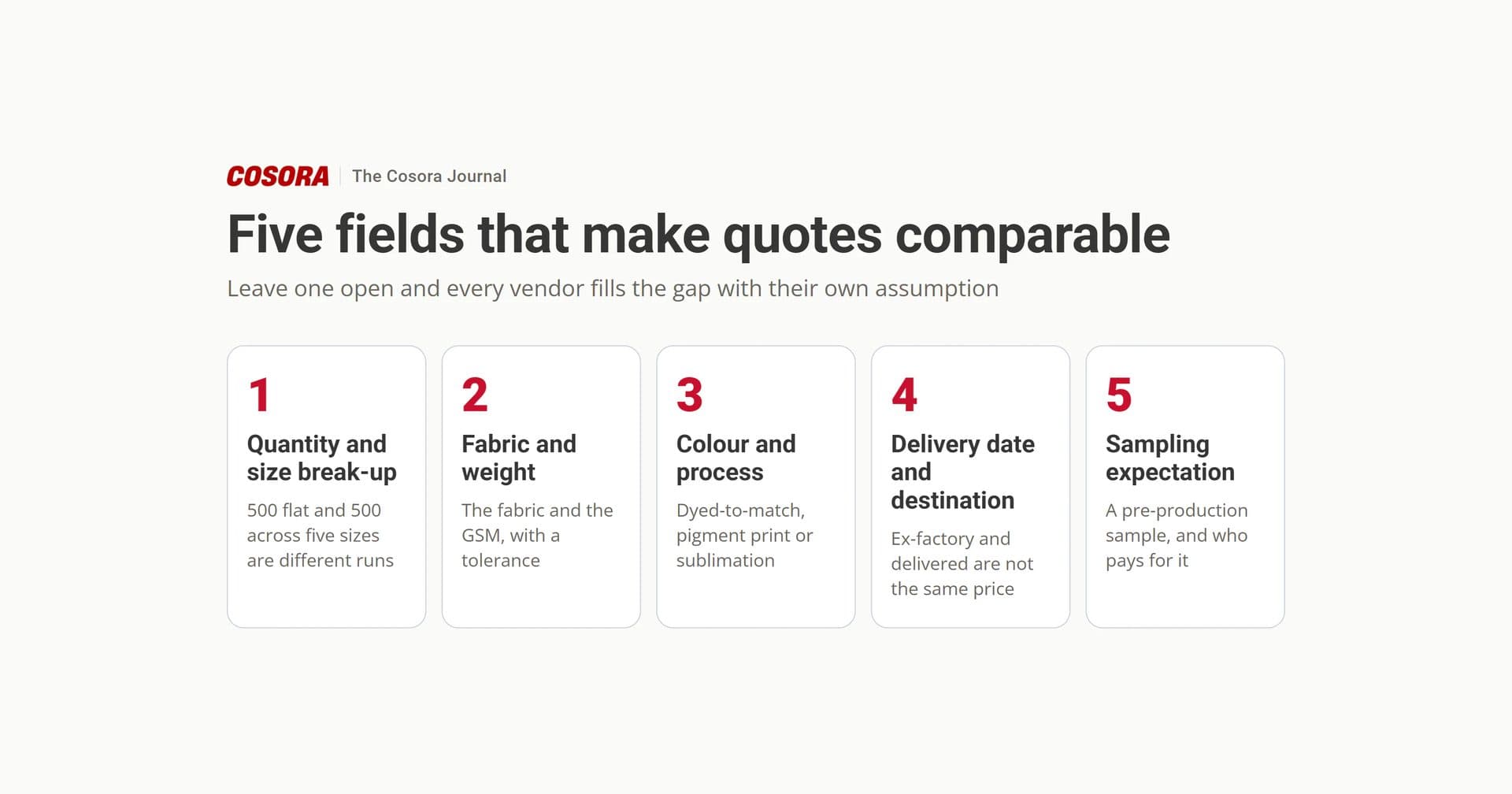
Put the GSM, the fabric and the tolerance in your RFQ. Quotes come back comparable.
Specifying GSM in an RFQ
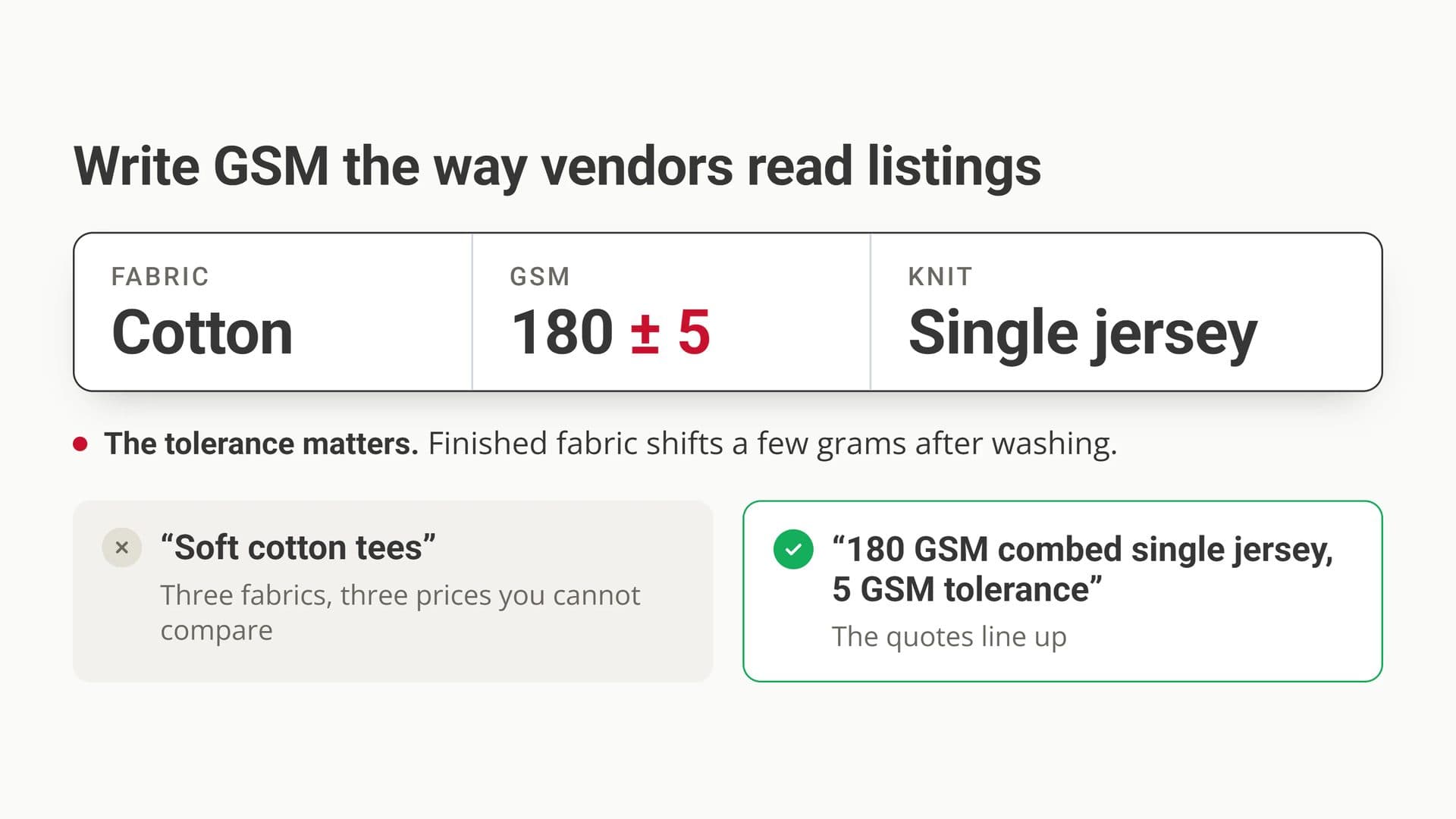
Write it the way vendors already read listings: Fabric: Cotton | GSM: 180 ± 5 | Knit: Single jersey. The tolerance matters, because finished fabric can shift a few grams after washing and compacting.
- State the fabric and the knit
- Give the GSM with a tolerance
- Name the quantity and the size break-up
- Attach a reference image
A worked example
Ask three mills for soft cotton tees and you get three different fabrics and three incomparable prices. Ask all three for 180 GSM combed single jersey with a 5 GSM tolerance and the quotes line up.